

Just a few years ago, the annual review would primarily encompass federal activity. But a shift began in 2018, and by the close of this year, it’s clear there is far more state activity impacting consumer debt collection.
Posts tagged as “state regulation”

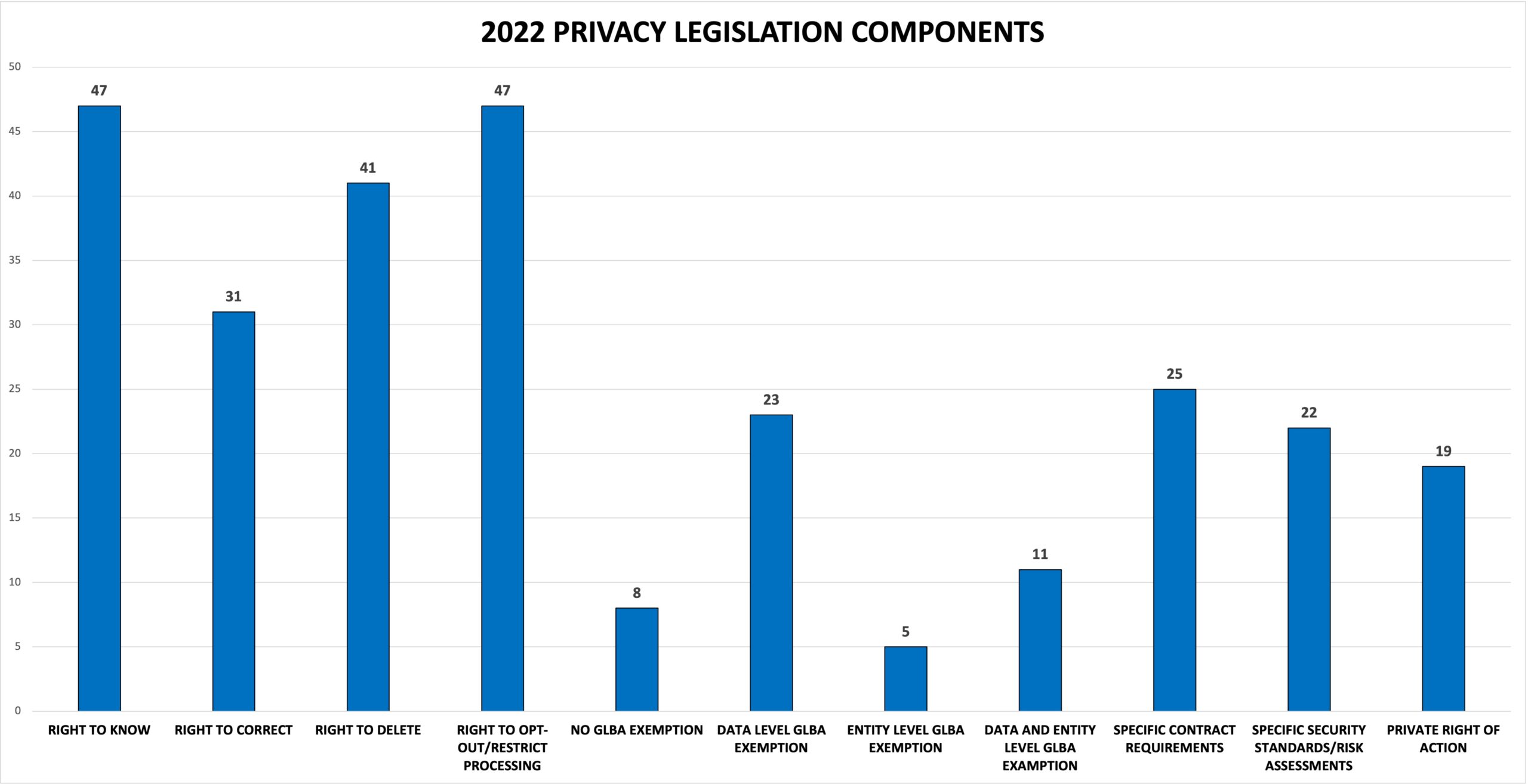
The upward trend in data privacy legislation continued in 2022. According to the National Conference of State Legislatures, “[a]t least 35 states and the District of Columbia in 2022 introduced or considered almost 200 consumer privacy bills,” which is a significant increase from 160 bills in 2021.

Legislation introduced in the New Jersey Assembly and Senate would prohibit “health care providers” from furnishing information concerning medical debt to credit reporting agencies.

A group is pushing Arizona Proposition 209, a ballot measure they say will reduce the burden of “medical debt.” But while a small portion of Proposition 209 might relieve some of the burden of medical debt, other beneficiaries are swindlers and bad actors.

On July 29, 2022, the New York Department of Financial Services published pre-proposal draft amendments to its Cybersecurity Regulations, 23 NYCRR 500.00, et seq. , that if adopted will require covered entities to implement numerous policy and operational changes.

On May 10, Gov. Ned Lamont signed into law Substitute Senate Bill 6 (Public Act 22-15), Connecticut’s version of comprehensive consumer data privacy legislation. This makes Connecticut the fifth state to enact such legislation, following California, Virginia, Colorado, and Utah. The Act will go into effect July 1, 2023.

Medical debt continues to capture the attention of state and federal government, with lawmakers and regulators continuing to target how medical debt is collected and how it is reflected on a consumer credit report.

There remain over 30 comprehensive consumer data privacy bills pending in the states, but some are falling off the chart as the legislative sessions come to an end. While the number of active bills is decreasing, there is one new state data privacy law, and others that continue to show movement.

On March 24, Utah Gov. Spence Cox signed into law SB 227, the Utah Consumer Privacy Act. This makes Utah the fourth state, behind California, Virginia, and Colorado, to enact comprehensive consumer data privacy legislation.
There are currently over 40 comprehensive consumer data privacy bills pending in the states as we enter the third month (for most states) of the legislative sessions.

When 2020 ended, many of us were unsure what 2021 would look like from a bankruptcy perspective. Would consumer filings increase? Could we see bankruptcy reform and particularly in the area of discharge of student loans?

On Oct. 8, S.737A was signed into New York law, “requiring debt collectors to inform debtors that written communications are available in large print format.” The legislation becomes effective Nov. 7, 2021.