

The U.S. Court of Appeals for the Eighth Circuit recently affirmed a trial court’s order remanding a putative class action suit to state court. In so ruling, the Eighth Circuit held that when a plaintiff contests the amount in controversy after removal, the party seeking to remove under the federal Class Action Fairness Act must establish the amount in controversy by a preponderance of the evidence.

The U.S. Court of Appeals for the Eighth Circuit recently held that the language of a future advances clause entitled the foreclosing mortgagee to the surplus proceeds of a condominium sale where there was an outstanding balance owed to same mortgagee on separate business loans extended to a different co-mortgagor.

The U.S. Court of Appeals for the Ninth Circuit recently affirmed a trial court’s grant of summary judgment in favor of the defendant bank in an action brought under the federal Telephone Consumer Protection Act.

The federal Consumer Financial Protection Bureau has issued an Advisory Opinion on "convenience" or "speed pay" fees, such as "fees imposed for making a payment online or by phone," under the federal Fair Debt Collection Practices Act.

The U.S. Court of Appeals for the Sixth Circuit recently ruled that a debt collector violated the federal Fair Debt Collection Practices Act when it sued a debtor’s wife to recover her husband’s legal fees under Ohio’s Necessaries Statute.

The U.S. Court of Appeals for the Fifth Circuit recently reversed a trial court’s judgment in favor of a mortgage servicer ruling that the servicer had violated its obligations under a Trial Period Plan in connection with a proposed loan modification when the servicer failed to offer a permanent loan modification after the borrower made payments in compliance with the “grace period” provisions of the TPP.

The U.S. Court of Appeals for the Eleventh Circuit recently reversed a trial court’s dismissal of a consumer’s complaint against a mortgage servicer brought under the federal Fair Debt Collection Practices Act and the Florida Consumer Collection Practices Act.

Determining whether your business engages in activities that can trigger coverage is discussed by the Federal Trade Commission in just released guidance entitled “FTC Safeguards Rule: What Your Business Needs to Know.” The Rule applies to many businesses beyond the scope of what are commonly understood to be “financial institutions” and has implications for service providers to covered entities.

The Appellate Court of Illinois, Third District, recently reversed a trial court’s order dismissing a debtor’s federal Fair Credit Reporting Act counterclaim against a bank.

The Illinois Court of Appeals, First District, recently affirmed a trial court’s order granting summary judgment in favor of a creditor against a guarantor, finding that the guaranty was continuing and therefore applied to a later note obligation, even though the note was issued some two years after the guaranty.

The Maryland Court of Appeals, the state’s highest court, recently held that under Maryland Commercial Law Article § 12-1018(b), a credit grantor that knowingly violates the Maryland Credit Grantor Closed End Credit Provisions is required to forfeit treble the amount of interest, fees, and charges collected in violation of the subtitle.
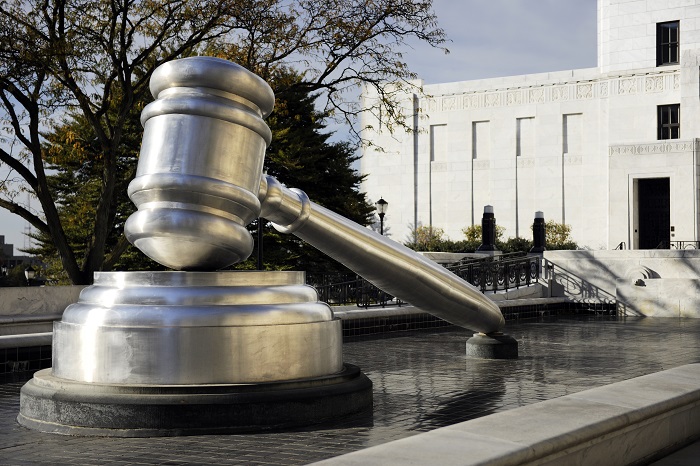
The Supreme Court of Ohio recently rejected the latest in a series of appeals and other challenges by a borrower to the validity of a judgment of foreclosure entered against the borrower.