

The New York Court of Appeals, the state's highest court, recently reversed the ruling of an intermediate appellate court and held that the inclusion of information that is not “false, misleading, obfuscatory, or unrelated” does not void an otherwise proper notice to borrowers sent pursuant to New York Real Property Actions and Proceedings Law § 1304, and thus does not bar a subsequently filed foreclosure action.

The U.S. Court of Appeals for the Eighth Circuit recently vacated a trial court’s order remanding a defendant's removal to federal court of a putative class action under the federal Class Action Fairness Act. In so ruling, the Eighth Circuit held that CAFA did not contain a presumption that class action cases should be remanded to state court, and the trial court failed to properly consider a declaration provided by the defendant in support of the request for removal under CAFA.

The California Supreme Court recently answered a certified question from the U.S. Court of Appeals for the Ninth Circuit, holding that a commercial general liability (“CGL”) insurance policy that provides coverage for “injury ... arising out of ... [o]ral or written publication, in any manner, of material that violates a person’s right of privacy” can cover liability for intrusion on the right of seclusion arising from violations of the federal Telephone Consumer Protection Act if such coverage is consistent with the insured’s objectively reasonable expectations.

The U.S. Court of Appeals for the District of Columbia Circuit recently reversed the ruling of a trial court and concluded that the Consumer Financial Protection Bureau’s Prepaid Rule, which regulates digital wallets and other prepaid accounts, does not mandate a “model clause” in violation of the Electronic Fund Transfer Act.

The New York Department of Financial Services and the New York City Department of Consumer and Worker Protection are simultaneously engaged in amending their consumer debt collection rules. While the DFS rulemaking has been underway for nearly two years, the DCWP began its efforts last fall.
Calif. App. Court (6th Dist) Holds Alleged Misidentification of ‘Charge-Off Creditor’ Not ‘Material’
Calif. App. Court (6th Dist) Holds Alleged Misidentification of ‘Charge-Off Creditor’ Not ‘Material’

The California Court of Appeal, Sixth Appellate District, recently affirmed the dismissal of a consumer's California Rosenthal Fair Debt Collection Practices Act claim based on an alleged violation of the federal Fair Debt Collection Practices Act and the California Fair Debt Buying Practices Act in supposedly failing to properly identify the "charge-off creditor."

The Ohio Supreme Court recently reversed the decision of an appellate court and reinstated the trial court’s grant of summary judgment in favor of an insurer and against an insured company on the company’s claim for breach of contract and bad faith denial of insurance coverage relating to damages arising from a ransomware attack.
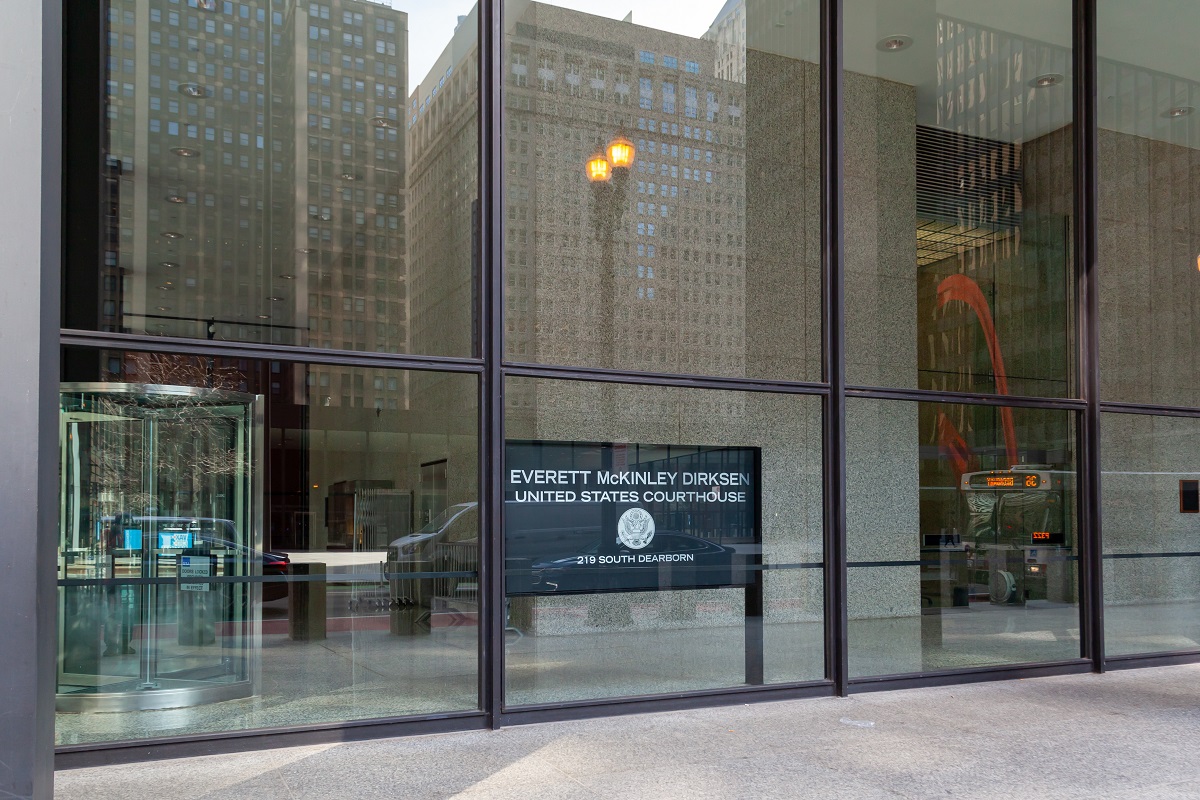
In a bankruptcy trustee's adversary action to recover money paid to a collection agency within 90 days prior to the filing of the debtor's bankruptcy petition, and pursuant to a previous garnishment order, the U.S. Court of Appeals for the Seventh Circuit recently reversed the ruling of a trial court denying the trustee's application.

The U.S. Court of Appeals for the Ninth Circuit recently affirmed a trial court’s ruling in favor of the Consumer Financial Protection Bureau against a company and its owner that provided fee-based scholarship and financial aid services to prospective and current college students.

The U.S. Court of Appeals for the Fifth Circuit recently affirmed the ruling of a trial court rejecting various claims by a non-customer that a bank owed a fiduciary duty to ensure that assets were kept in a trust for the non-customer.

The Consumer Financial Protection Bureau increased the maximum civil penalty it can impose within its jurisdiction after Jan. 15, 2023. The increases are mandated by federal law, which requires agencies to adjust for inflation each civil monetary penalty within an agency’s jurisdiction by Jan. 15, 2023.

The U.S. Court of Appeals for the Second Circuit recently affirmed a trial court’s order granting summary judgment in favor of a credit reporting agency and ruled that reporting a student loan debt that was discharged in bankruptcy as “due and owing” is not cognizable as an “inaccuracy” under the federal Fair Credit Reporting Act.